How to Frame Perler Beads (and Hang Big Wall Art)
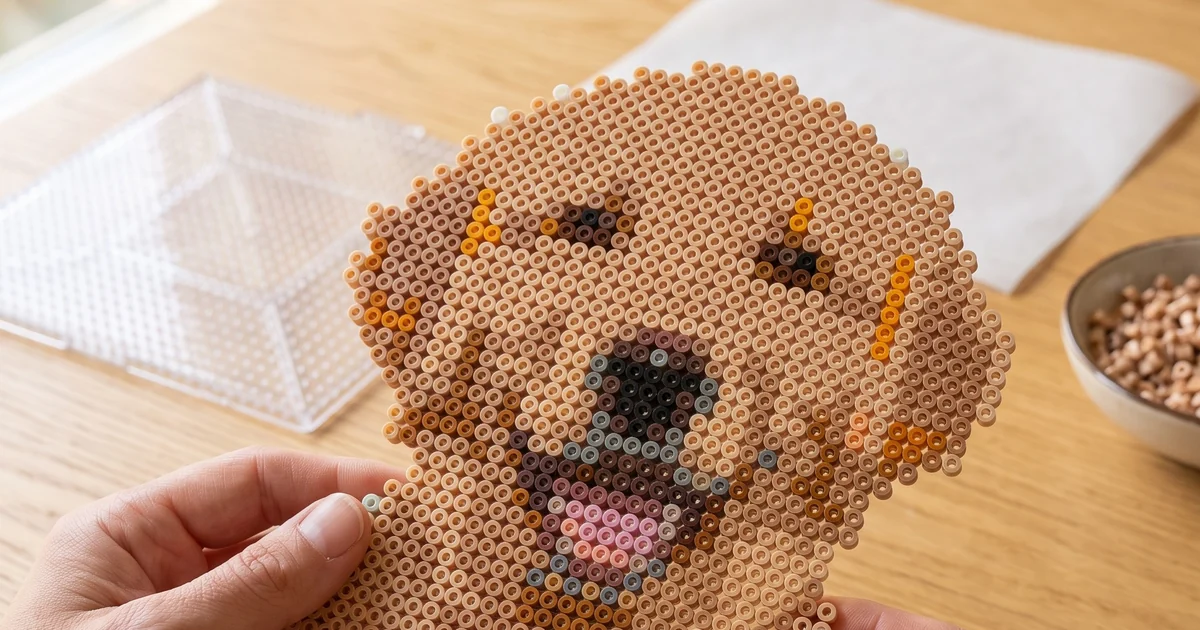
A finished bead portrait deserves better than a drawer. How to frame Perler beads comes down to three choices: glass or no glass, how deep the frame is, and how you fix the piece so it stays flat. Here's which store frames fit one, four or nine pegboards, how to hang big pieces without a frame and how to keep colors bright. It all works the same for Hama beads, the brand most UK crafters use.
Should Perler bead art go behind glass?
It doesn't have to. Fused beads are sturdy, and the bead texture is half the charm. Glass or acrylic still helps in some rooms.
| What matters | Behind glass or acrylic | No glass |
|---|---|---|
| Dust | Stays clean | Needs a soft brush now and then |
| Bead texture | Glare can hide it | Every bead shows |
| Kitchens, kids' rooms | Safe from grease and fingers | Gets touched |
| Weight and cost | Heavier, pricier | Light, cheap |
For big frames and kids' rooms, pick acrylic: it's lighter and doesn't shatter.
One catch: a fused piece is much thicker than a photo. In a thin frame, the glass presses on the beads and the back may not close. Deep frames solve that.
How to frame Perler beads: four frame types
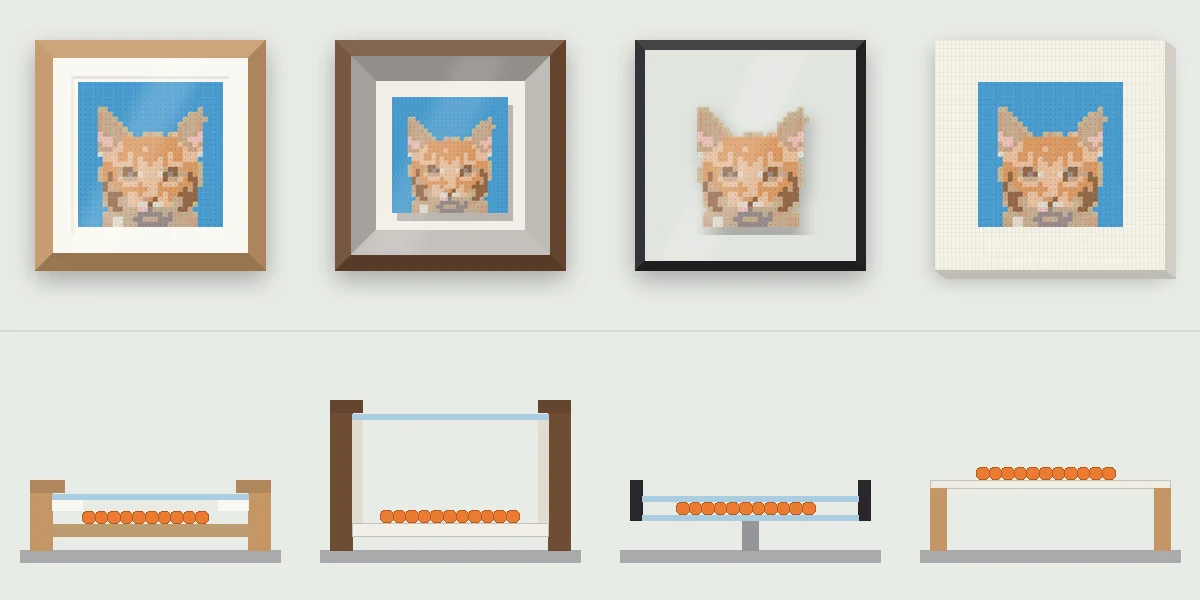
- Standard frame with a mat. Fine for one board if the frame has room behind the glass for mat, beads and backing. Check the depth before you buy. The mat is thinner than the beads, so it won't keep the glass off them.
- Shadow box. A deep frame with space between glass and backing, so nothing touches the piece. It's the safest choice at any size. In the US, 12 × 12 in shadow boxes are easy to find because scrapbookers use them, and a 2 × 2 piece fits inside.
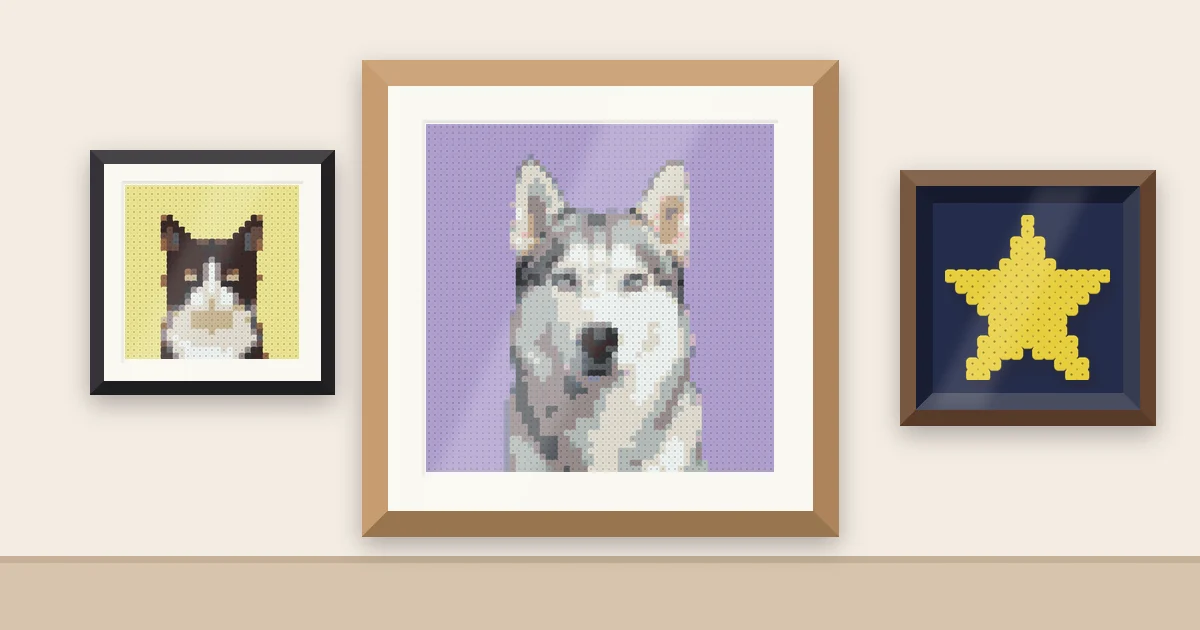
- Floating frame. Two panes of glass hold the piece, and the wall shows through around it. It suits shapes with no background, like a star. No glue needed.
- Canvas. Glue the piece onto a stretched canvas and hang it as is. No glass, light and cheap.
Which store frame fits your piece?
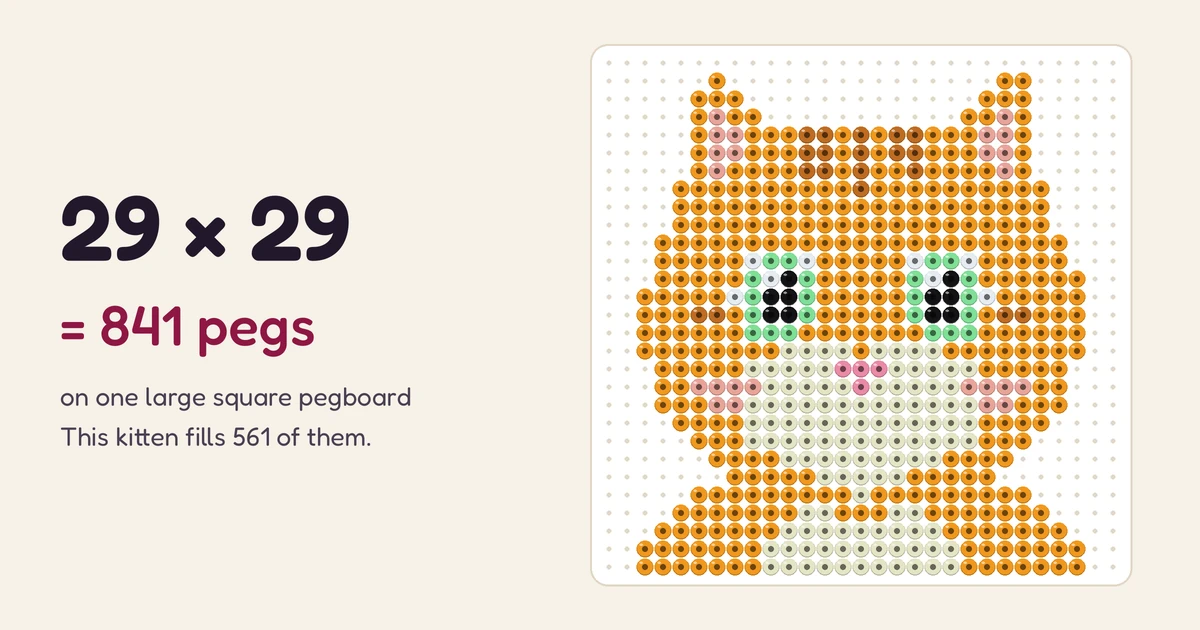
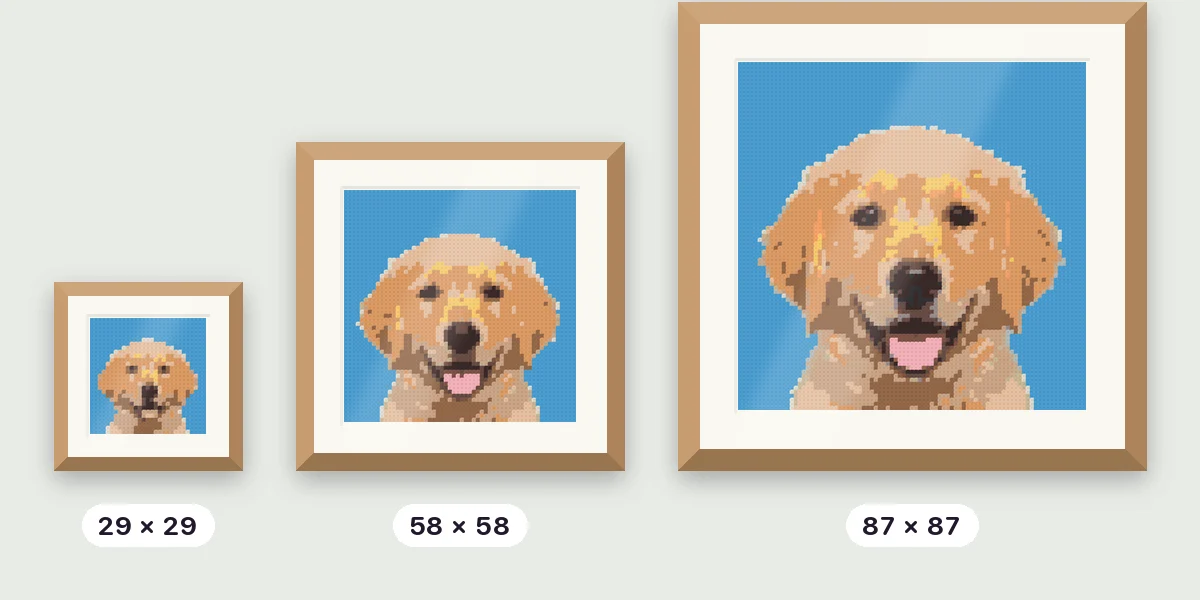
With 5 mm beads, a large square pegboard is 29 × 29 pegs, about 5.7 in (14.5 cm) across. Frames are sold by glass size, and the frame's lip covers a little of each edge, so the glass must be bigger than the piece. Our pegboard guide explains 2 × 2 and 3 × 3 blocks.
| Boards | Piece, about | Frame with no mat | Frame with a mat |
|---|---|---|---|
| 1 (29 × 29) | 5.7 in (14.5 cm) | 8 × 8 in | 10 × 10 in, mat for 6 × 6 in photos |
| 2 × 2 (58 × 58) | 11.4 in (29 cm) | 12 × 12 in shadow box | 16 × 16 in, mat cut to size |
| 3 × 3 (87 × 87) | 17.1 in (43.5 cm) | 18 × 18 in | 20 × 20 in, mat cut to size |
- Measure the fused piece, not the pattern. The widths above are approximate.
- Ready-made mats open a little smaller than the label. One for 6 × 6 in photos opens to about 5.5 in, so it overlaps a single board by about half a bead per side.
- For 2 × 2 and 3 × 3, get the mat cut at a frame shop. Ask for a window slightly smaller than the piece if the mat should overlap it, or slightly larger if the piece sits on the backing inside it.
- Rectangles work too. One board with the pet's name in bead letters below fits an 8 × 10 in frame.
How to mount it so it doesn't slide or bow
- Flatten it first. Iron both sides and cool the piece under a heavy book. For display, Perler's FAQ suggests ironing the "wrong" side a little longer. Our ironing guide covers both steps. A curved piece fights the frame.
- Pick a firm backing. The frame's board works for one pegboard; use foam board or mat board for bigger pieces.
- Fix the piece to the backing. Don't count on the glass: a loose piece slips down once the frame hangs.
- Sew it. Run clear thread through a few open bead holes and through the backing, then tie it off at the back. Nothing sticky touches the beads, and you can undo it.
- Glue it. Perler's lion head wall decor glues the fused piece onto cardboard with craft glue or hot glue. Perler beads are polyethylene, which many glues grip poorly, so test on a scrap. Spread dots over the whole back.
- Stick it. Glue dots or double-sided foam tape hold small pieces, and foam tape lifts them a little in a shadow box.
- Test it. Close the frame, hold it upright and tap it. Nothing should shift.
An adult handles the iron and the hot glue gun. Loose beads are a choking hazard for children under 3.
Hanging big multi-board art without a frame
A 2 × 2 or 3 × 3 piece is wide and thin, so it bends. A stiff back keeps it flat.
- Check the fuse. A piece that splits along a row is under-fused. Iron the back again first.
- Mount it on a board cut a little smaller than the piece, so nothing shows from the front: foam board for 2 × 2, thin plywood or MDF for 3 × 3.
- Put the hanger on the board, never on the beads. A sawtooth hanger suits small boards; use two D-rings and picture wire for big ones. Picture-hanging strips work too if the weight limit on the pack allows.
- Hang one board from thread. Perler's moon and star wall hanging laces embroidery thread through an open bead hole and glues the knotted loop at the back. Fine for one board, not a 3 × 3.
Keep big pieces away from radiators and sunny windowsills. Plastic that softens under an iron can warp with steady heat.
How do you keep colors from fading?
Light fades color. The Canadian Conservation Institute explains that daylight carries a lot of ultraviolet, which fades many dyes and yellows several plastics.
- Hang it out of direct sun. This matters more than any glass.
- Don't trust plain glass. In CCI's tests, regular glass cut UV by only about a quarter.
- In a bright room, use UV-filtering glazing. CCI notes that acrylics meeting the ASTM D4802 standard cut UV by at least 95%.
- Know the limit. Visible light fades colors too, so UV filtering slows fading but doesn't stop it.
Keep a few spare beads of each color. They help with repairs and, a year on, show whether the piece has faded.
A framed portrait as a gift
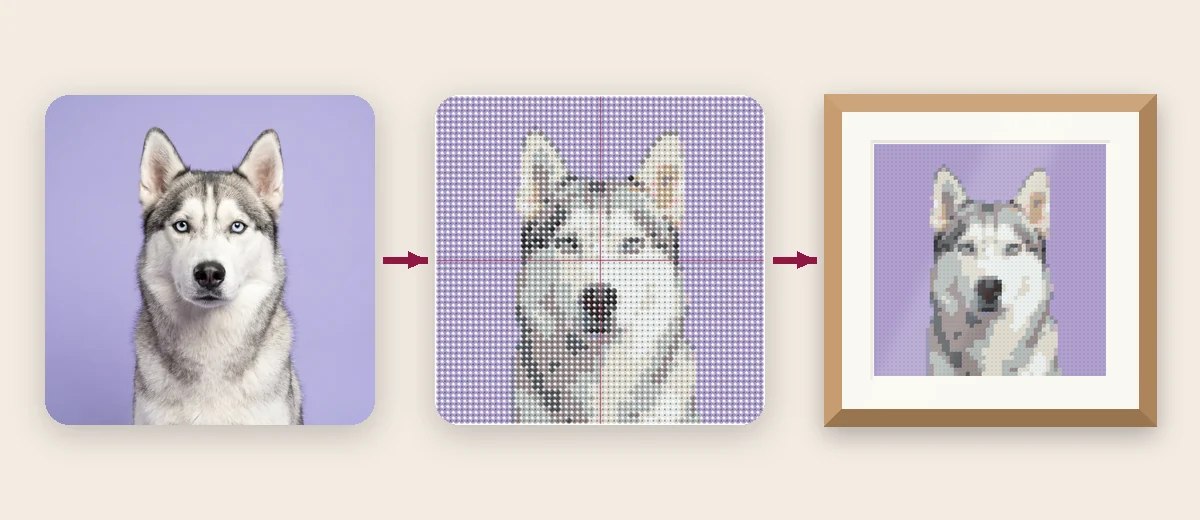
A 2 × 2 or 3 × 3 pet portrait is the classic framed gift. Framing is easy when you know the finished size before the first bead: you can buy the frame first.
BeadPop plans that on your iPhone. You pick a photo and choose 1 board, 2 × 2 or 3 × 3, so the size and the frame are settled from the start. The app makes the pattern in your brand's real colors (Perler, Hama, Artkal and more), counts every color and prints it at real size, one page per pegboard, to slide under clear boards.
- Fill the background with one color if the piece goes behind a mat, like the lavender behind our husky. A full 58 × 58 square takes 3,364 beads.
- Leave the background empty for a floating frame or a shadow box with a colored backing. You use fewer beads.
- Start with a sharp photo where the face fills the frame.
- Add the story. Tuck the original photo into the card. Our DIY photo gifts list has more ideas.
Turn your own photo into a bead pattern
BeadPop turns any photo into a bead pattern with real bead colors and a shopping list.
FAQ
Do you need glass to frame Perler beads?
No. Use glass or acrylic in kitchens, kids' rooms and dusty spots, and UV-filtering glazing in bright rooms.
What size frame fits a Perler bead pegboard?
One large board, about 5.7 in (14.5 cm), fits an 8 × 8 in frame with no mat or a 10 × 10 in frame with a mat for 6 × 6 in photos.
How do you attach Perler beads to a frame backing?
Sew them on with clear thread through open bead holes, or use craft glue or hot glue after testing on a scrap.
Can you frame Hama beads the same way?
Yes. Hama Midi beads are 5 mm and the large square board is 29 × 29 pegs, so every size here applies.
Turn your own photo into a bead pattern
BeadPop turns any photo into a bead pattern with real bead colors and a shopping list.