Mini Perler Beads: How to Use, Iron and Design Them
Mini Perler beads are the fuse beads you already know, at half the width. That one change lets a small piece hold far more detail: the shape of an eye, a white muzzle, a thin stripe between the ears. It also asks for more patience, a pair of tweezers and a lighter hand with the iron. This guide covers all of it, from sizes and pegboards to ironing and a pet portrait you can actually finish.
The same advice works for Hama Mini beads, the mini line most crafters use in the UK and Europe, and for the 2.6 mm minis from Artkal and MARD.
What are mini Perler beads?
Minis are a smaller version of the classic fuse bead. Perler lists its Mini beads at 2.61 mm wide and 2.8 mm high, for ages 12 and up. A classic Perler bead is 4.77 mm wide, and the pegs on a regular board sit about 5 mm apart. So a mini is roughly half the width of a regular bead and takes up about a quarter of the space.
Other brands make minis too:
| Brand | Mini size | Good to know |
|---|---|---|
| Perler Mini | 2.61 mm wide | Bags of 2,000; ages 12+ |
| Hama Mini | 2.5 mm | 79 colors; ages 10+ |
| Artkal C series | 2.6 mm | Sold mostly online |
| MARD | 2.6 mm | Common in Chinese patterns |
Hama calls the Mini its smallest bead and recommends it for children aged 10 and up (Hama's bead size guide). The 0.1 mm gap between Hama and the 2.6 mm brands looks tiny, but it adds up across a long row. Keep each brand's beads on that brand's pegboard. Our Perler vs Hama vs Artkal comparison goes deeper into sizes, colors and codes.
BeadPop is not affiliated with Perler, Hama, Artkal or MARD.
Are mini beads worth it?
For the right project, yes. Here is the honest trade.
Detail. In the same width, you fit about twice as many minis across, so about four times as many in a square. Fifteen regular beads span about 75 mm (3 in). So do 29 Perler minis.
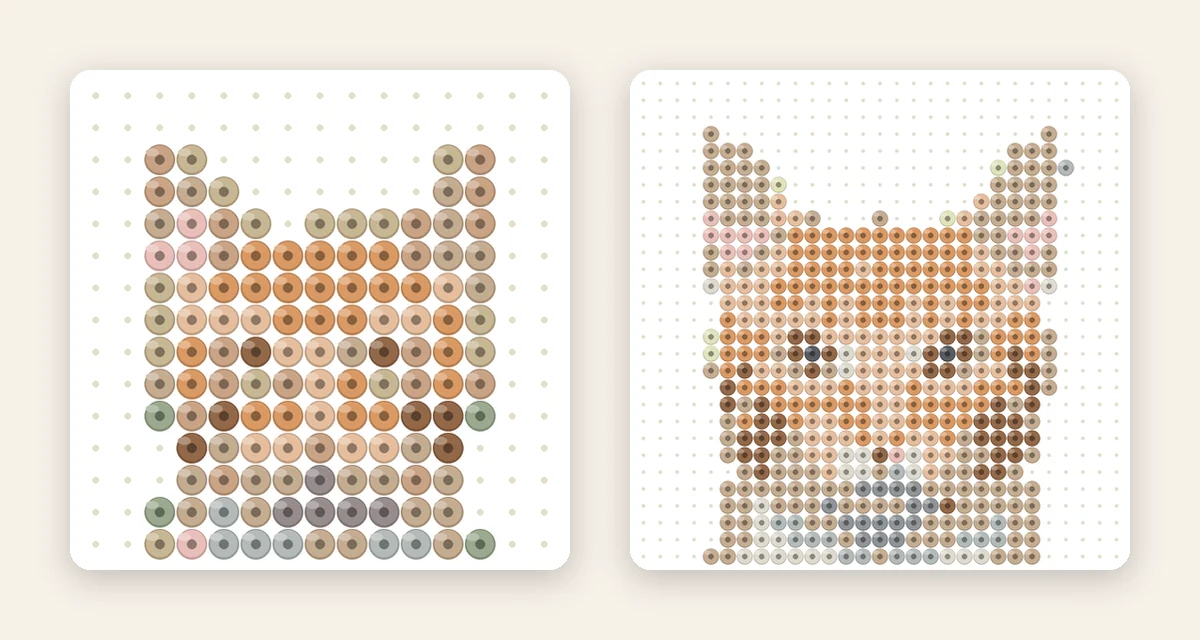
Time. More beads per inch means more placing. That 3-inch square takes 225 regular beads (15 × 15) or 841 minis (29 × 29). Expect a mini piece to take several times longer than a regular piece of the same size.
Cost. Perler and Hama sell minis in bags of 2,000. A full 29 × 29 mini piece uses at most 841 beads, spread across all its colors.
Who it suits. Teens and adults who enjoy slow, precise work. Hama notes that many adults use its Minis as an alternative to cross-stitch. For young children, stick to regular beads or Hama's big 10 mm Maxi beads, which Hama recommends from age 3.
A simple rule: if detail matters more than size (a face, a pet, small letters), choose minis. If you want something big and quick, choose regular beads.
Tools that make minis easier
Tweezers and a bead tray
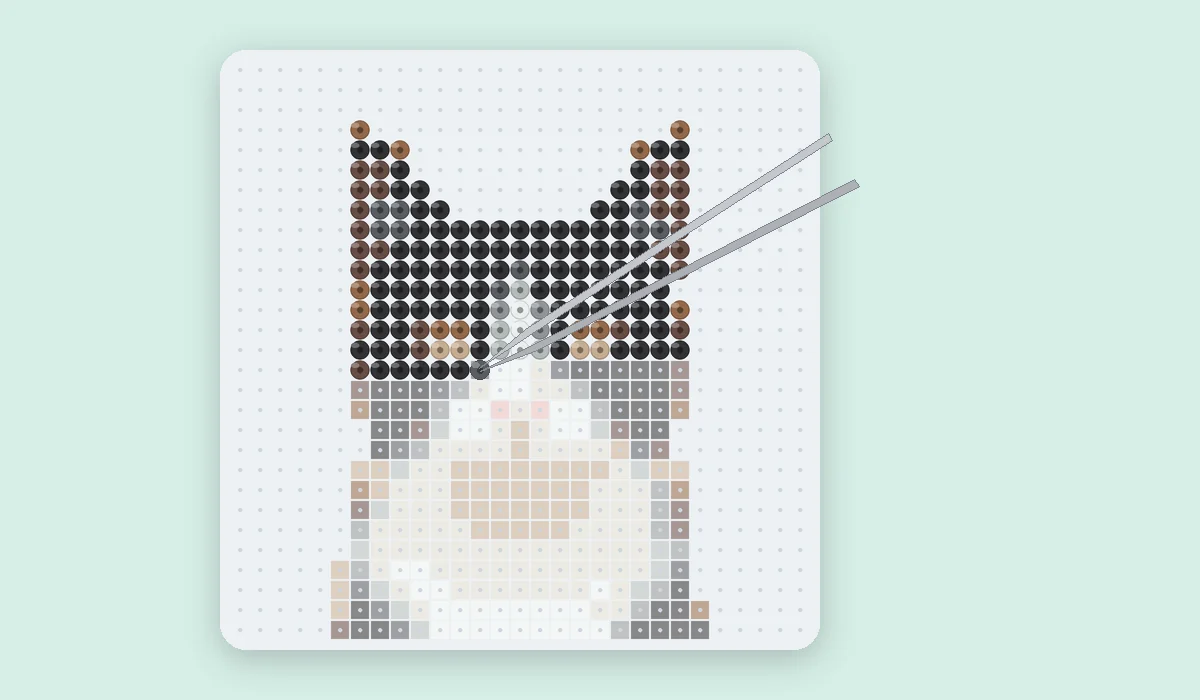
You can place minis with your fingers, but tweezers are faster and keep the board neat. Perler sells metal mini bead tweezers, about 4.25 in long, for ages 14 and up. Hama sells a pack of three tweezers for placing small beads.
- Use a shallow tray. Pour a little of one color into a dish with low sides, so the tweezers can reach every bead.
- Grip each bead by its sides, with the hole pointing up and down, so it drops straight onto the peg.
- Keep bags closed. A spilled bag of 2,000 minis takes a long time to pick up.
Mini pegboards and a printed pattern under a clear board
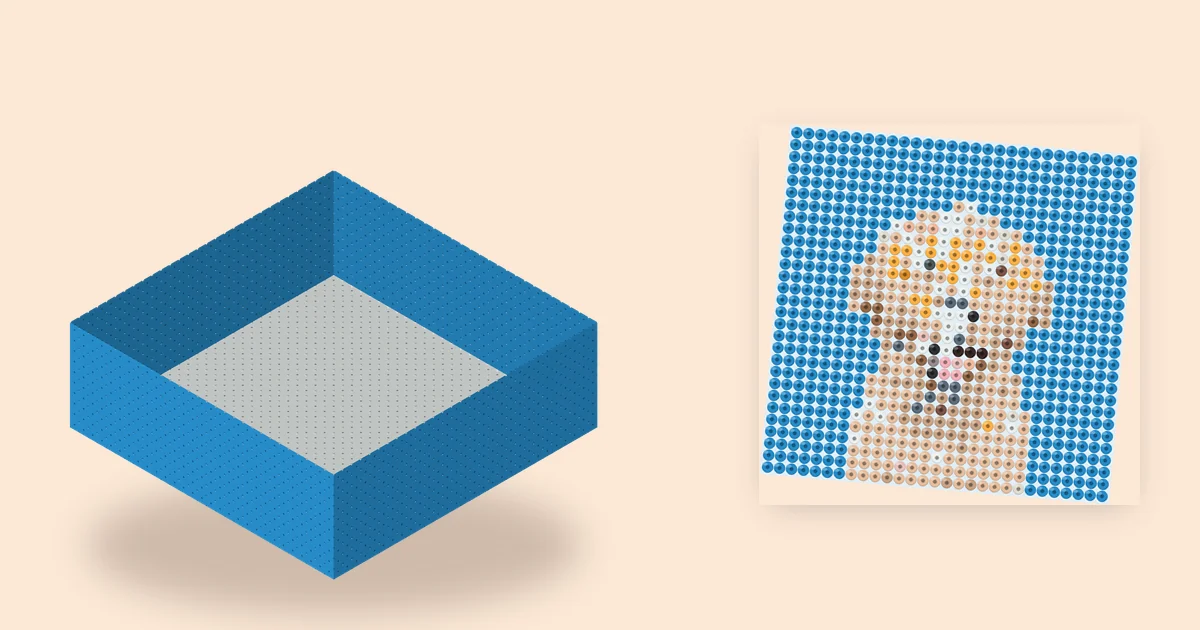
Minis need mini pegboards. Regular pegs are spaced for 5 mm beads, and Perler labels its mini boards as not for standard-size beads. The common sizes:
- Perler large mini pegboard: 5.875 in (about 14.9 cm) square. It interlocks with Perler's other square mini boards. Ages 12+.
- Hama Mini large square: 3,249 pegs, a 57 × 57 grid. It connects to other boards of the same type. Ages 10+.
- Artkal large mini pegboard: 14.5 cm square, clear or white, with either 50 × 50 or 52 × 52 pegs. Artkal warns that the two versions have different spacing and can't be joined.
That last point matters: mini peg spacing is not standard. Buy boards from one line, and test a few beads before you start a big project.
The best trick for minis is a printed pattern under a clear board. Print the pattern at actual size, slide it under a clear mini pegboard and cover each colored square with a bead of that color. You never count rows, and you never lose your place. Hama's square Mini boards are white, so pick a clear board for this method.
Placing mini beads without spilling the board
- Work on a flat, steady table. Never on your lap or a sofa cushion. One bump can empty a half-finished mini board.
- Fill one color at a time. You switch trays less often, and on a printed pattern the empty squares of that color are easy to spot.
- Work away from yourself. Start at the edge nearest you, so your hand doesn't brush the rows you've already placed.
- Push each bead all the way down. A bead that sits high pops off when you place its neighbor, and it melts unevenly.
- Fix mistakes right away. Pull the wrong bead straight up with the tweezers.
- Build where you'll iron. Perler's tape method for moving big designs is not meant for minis. Plan to iron the piece on its board, in place.
- Taking a break? Leave the board where it is and cover it loosely with a box lid, away from pets and elbows.
How do you iron mini Perler beads?
Minis melt faster than regular beads, so go gently and check often. An adult should do this part. Both Perler and Hama say so.
- Set the iron, no steam. Perler's mini bead projects use the medium setting of a household iron. Hama recommends the wool setting for Mini beads, one step cooler than the cotton setting it gives for regular Midi beads (Hama's ironing instructions). If your iron runs hot, start lower.
- Cover the board with ironing paper. Keep it flat, with a margin on every side.
- Iron about 10 seconds in small circles, without pressing down. That is Perler's figure for minis in its mini beads cat and dog project. Lift a corner of the paper to check, and add a few seconds only if the beads haven't joined.
- Stop while the holes are still open. At this size, holes close fast, and a closed hole shows.
- Let it cool, then peel off the paper and lift the piece from the pegboard.
- Flip it and iron the back the same way.
- Cool it flat under a heavy book. Hama recommends this, and it keeps the piece from curling.
Irons vary, so Hama suggests testing your setting on a small design first. For more on heat, paper and fixing a warped piece, see our guide to ironing Perler beads.
Mini bead projects: earrings, keychains, detailed portraits
Minis suit anything small that should look neat:
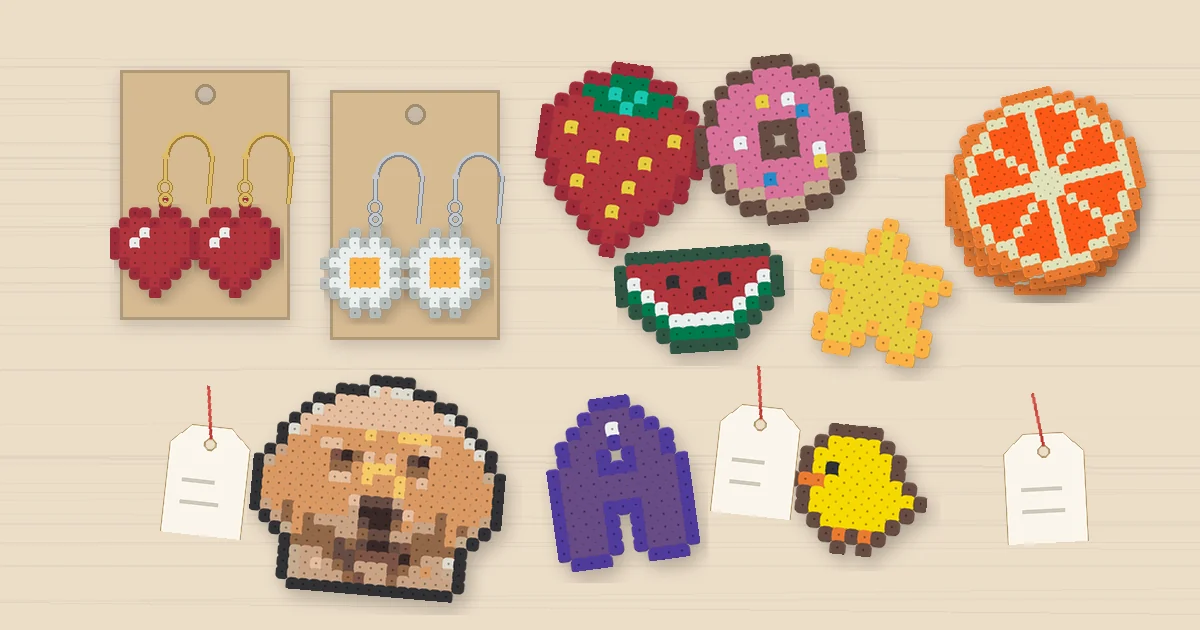
- Earrings and pendants. A design 15 beads wide is about 4 cm (1.5 in) in Perler minis. Perler publishes several mini bead jewelry projects, from earrings to tassel necklaces. Our Perler bead earrings guide covers hooks, jump rings and keeping them light.
- Keychains and bag charms. A 20 × 20 mini design is about 5 cm (2 in) wide: big enough to read, small enough for your keys. Our Perler bead keychain guide shows how to add the ring.
- Pins, magnets and tiny ornaments. Perler's mini project gallery includes pins and ornaments.
- Lettering. Initials and short words stay readable.
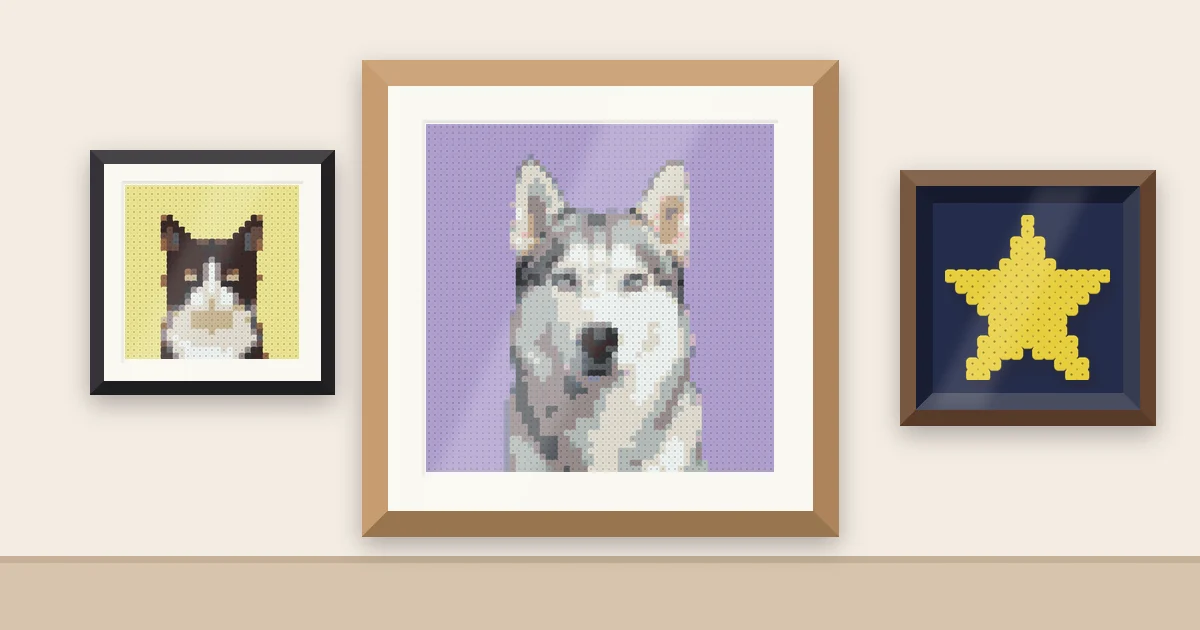
- Detailed portraits. Faces, pets and photos, where every extra bead adds detail.
A pet portrait with mini beads
This is where minis shine. A pet's face depends on small things: the shape of the eyes, a white chin, a darker patch around one ear. A small portrait in regular beads has to drop most of them. In minis, they fit.
Same board, smaller piece, more detail
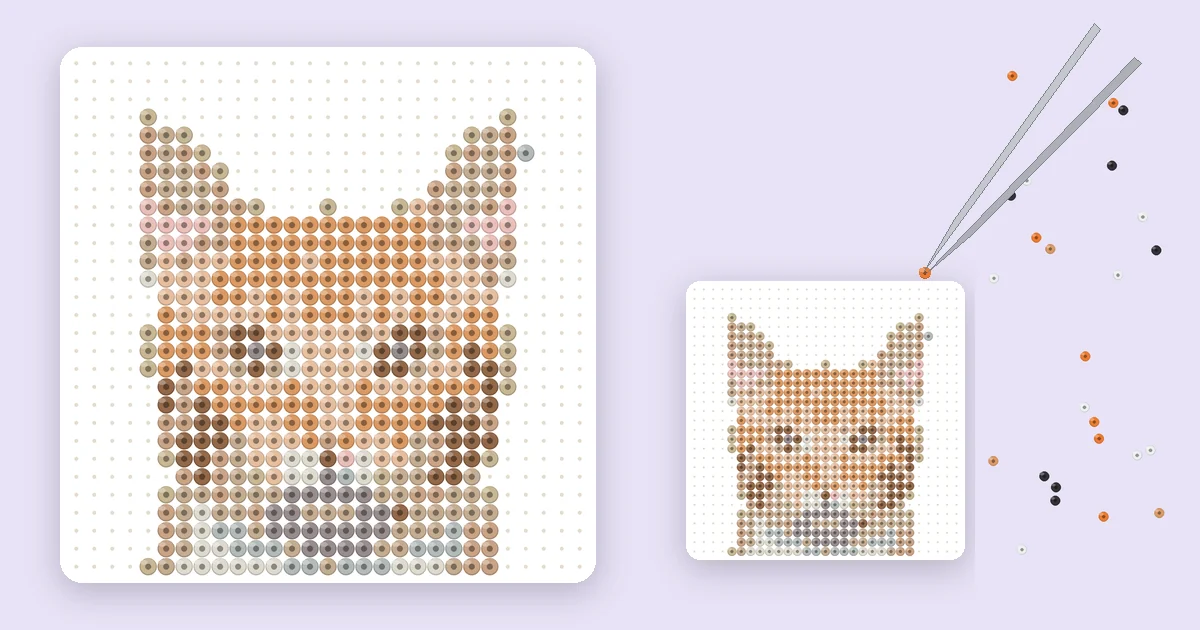
The cover of this article shows the same 29 × 29 cat on a regular board and on a mini board. In regular beads it is about 14.5 cm (5.7 in) wide. In Perler minis it is about 7.5 cm (3 in) wide, half the width, with exactly the same detail.
So minis give you two choices:
- Keep the pattern, shrink the piece. A 29 × 29 portrait becomes a small frame, a magnet or a large keychain.
- Keep the size, add detail. A full Hama Mini large square (57 × 57) comes out about as wide as one regular 29 × 29 board, with almost four times the beads.
For the photo, pick a close, well-lit shot of the face, with the pet looking at the camera. A plain background keeps the outline clean. Crop tight around the head, so the beads go to the face and not the sofa.
Matching colors to the mini palette
A mini range is not always a copy of the regular range from the same brand. Hama, for example, lists 79 Mini colors and 86 Midi colors. A pattern made for regular beads can call for a shade your mini line doesn't make, so make the pattern in the palette you will actually build with.
That is what BeadPop does on iPhone. Choose a photo of your pet, pick the Perler Mini, Hama Mini, Artkal C or MARD palette and set the width, from 8 to 200 beads. The app builds the pattern from that brand's real colors and lists the exact number of beads you need in each color. A build mode lets you place the beads one color at a time. The PDF prints at actual size, one page per pegboard, ready to slide under a clear board. At mini size there is no room for a code in each square, so you can also print an enlarged version, with the color code on every square, and keep it beside you.
Turn your own photo into a bead pattern
BeadPop turns any photo into a bead pattern with real bead colors and a shopping list.
FAQ
How big are mini Perler beads?
Perler lists its Mini beads at 2.61 mm wide and 2.8 mm high, about half the width of a classic Perler bead (4.77 mm). Hama Mini beads are 2.5 mm, and Artkal C and MARD minis are 2.6 mm.
Can you use mini Perler beads on a regular pegboard?
No. Regular pegs are spaced for 5 mm beads, so minis won't line up in a grid. Use a mini pegboard, ideally from the same brand as your beads.
What heat do you use for mini Perler beads?
Perler's mini projects use a medium setting for about 10 seconds per side. Hama recommends the wool setting for its Mini beads. Use ironing paper, no steam, and check often, because minis melt fast.
Are mini Perler beads safe for kids?
Perler lists its minis for ages 12 and up, and Hama recommends its Minis from age 10. Loose beads of any size are a choking hazard, so keep them away from children under 3. An adult should always do the ironing.
Are Perler minis and Hama minis the same size?
Close, but not identical: 2.61 mm versus 2.5 mm. Over a long row, that gap adds up, so keep each brand on its own pegboard.
Do you need tweezers for mini beads?
Not strictly, but they help a lot. Perler and Hama both sell tweezers for placing small beads.
New to fuse beads? Start with our beginner's guide to using Perler beads, and come back to minis once regular beads feel easy.
Turn your own photo into a bead pattern
BeadPop turns any photo into a bead pattern with real bead colors and a shopping list.