Perler Bead Color Chart: Every Color and How to Pick
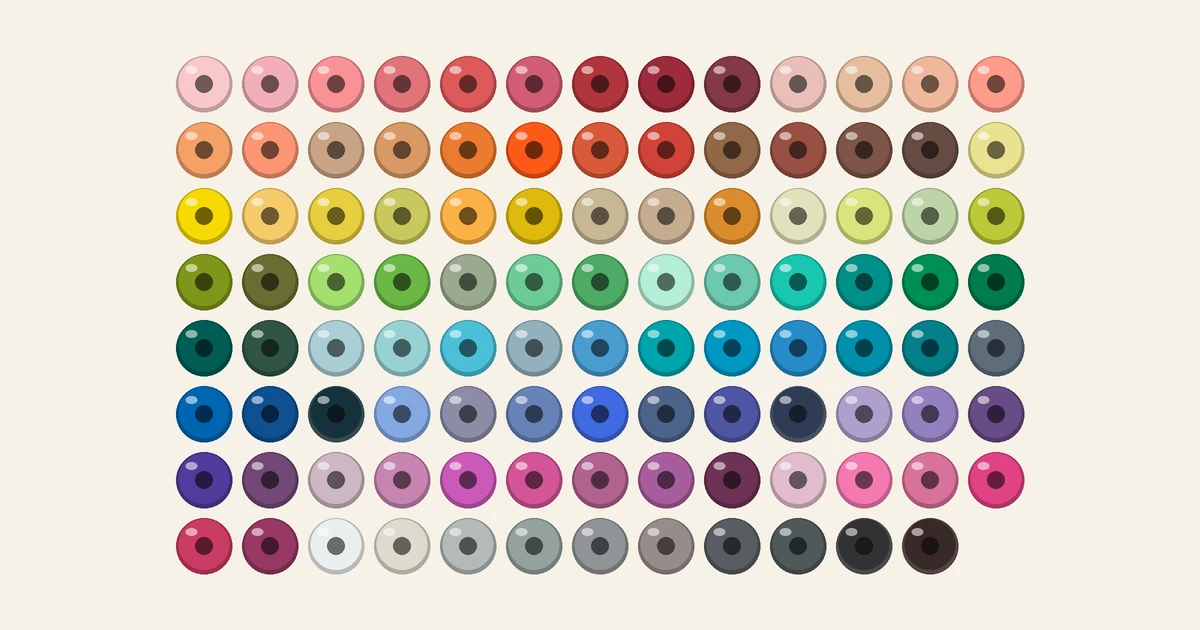
A Perler bead color chart is the most useful page in any bead box: it tells you what each shade is called, what code to buy and which colors you can swap. This one lists all 103 Perler colors in BeadPop's catalog with their codes and approximate hex values. It also covers the part a chart can't show you: which colors look alike, which change when you iron them and how to pick colors for a photo.
How many Perler colors are there?
Roughly 100 solid colors, plus specialty finishes. Perler doesn't print one fixed total on its shop pages, and the number moves as shades are added and retired. Perler describes its range as classic neutrals and multi-color mixes plus specialty shades: neon, pastel, metallic and glow-in-the-dark.
BeadPop's catalog has 103 Perler colors for standard 5 mm beads and 41 for Perler minis. The values come from published color data (the open-source BeadColors project). For the official list, use the color guide Perler offers on perler.com and check it against your own beads.
How to read color names and codes
Every Perler color has three identifiers, and patterns use all of them:
- The name, like "Fawn" or "Toasted Marshmallow". Names are friendly but useless across brands: Hama has its own "Brown" that looks nothing like Perler's.
- The bag code, like 80-19001 for White. Older colors use 80-19 followed by a number; newer colors use 80-15, like 80-15205 for Fawn.
- The short code, like P01 or P205. It comes from the last digits of the bag code, with a P in front, and is short enough to print inside a square on a pattern.
When a pattern lists only short codes, match them to the bag. When it lists only names, check the brand first.
The full Perler bead color chart
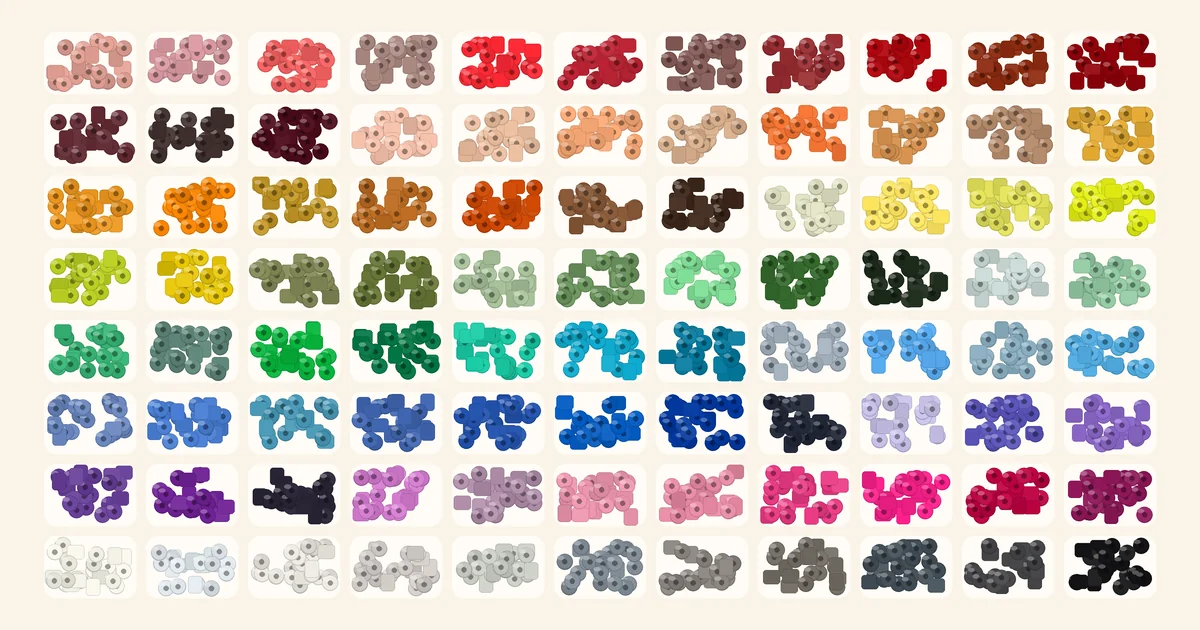
Here are all 103 colors, grouped by hue so you can see which shades sit next to each other. A text list with every code and hex value is at the end of this article.
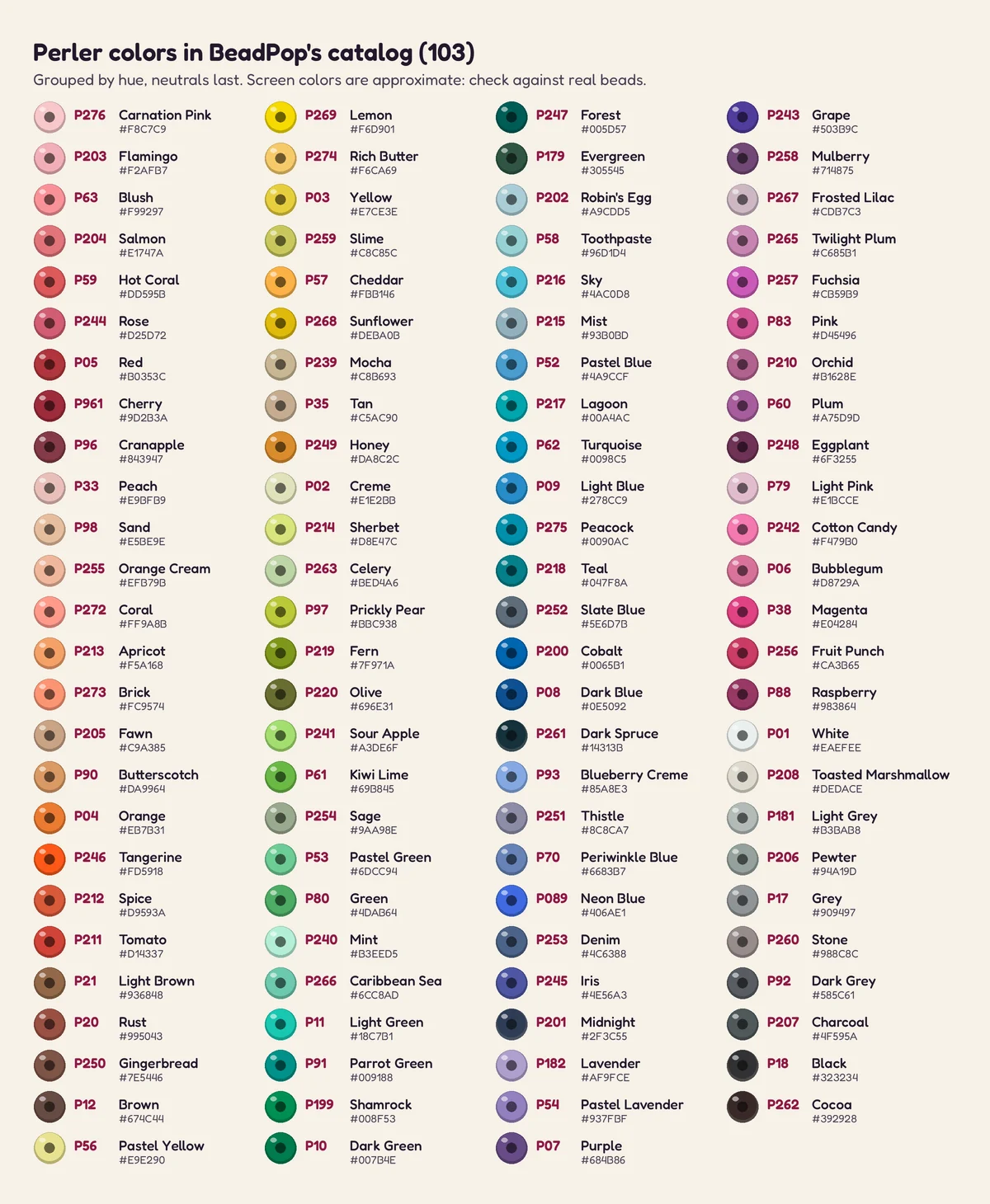
Color families that matter: skin tones, grays, browns, pastels
Most of the work in a portrait happens in a few families of quiet colors, not in the bright ones.
Grays
Perler's grays make a clean ladder from light to dark: White (P01), Toasted Marshmallow (P208), Light Grey (P181), Pewter (P206), Grey (P17), Stone (P260), Dark Grey (P92), Charcoal (P207) and Black (P18). They are not all neutral. Stone leans warm, slightly pink, and Pewter leans green. Use that: warm grays for a tabby's muzzle, cool ones for a husky.
Browns and skin tones
From darkest to lightest: Cocoa (P262), Brown (P12), Gingerbread (P250), Rust (P20), Light Brown (P21), Butterscotch (P90), Fawn (P205), Tan (P35), Mocha (P239), Orange Cream (P255), Sand (P98) and Peach (P33). For faces, pick three or four steps from this ladder and shade from light to dark.
These colors do most of the work in pet portraits too. When BeadPop turned a photo of an orange cat into a 2 × 2 Perler pattern, its biggest colors were Sand (306 beads), Butterscotch (245), Fawn (225), Toasted Marshmallow (202) and Tan (170).
Pastels
Pastel Yellow (P56), Mint (P240), Celery (P263), Light Pink (P79), Robin's Egg (P202), Toothpaste (P58), Flamingo (P203) and Frosted Lilac (P267) are the soft, light pastels. Watch the names: Pastel Blue (P52) and Pastel Lavender (P54) are darker and stronger than "pastel" suggests.
Lookalikes
Some pairs are so close that they are easy to mix up when you sort beads, especially under warm indoor light. These are the six closest pairs of solid Perler colors by color difference (ΔE, CIEDE2000; around 2 or less is hard to tell apart side by side):
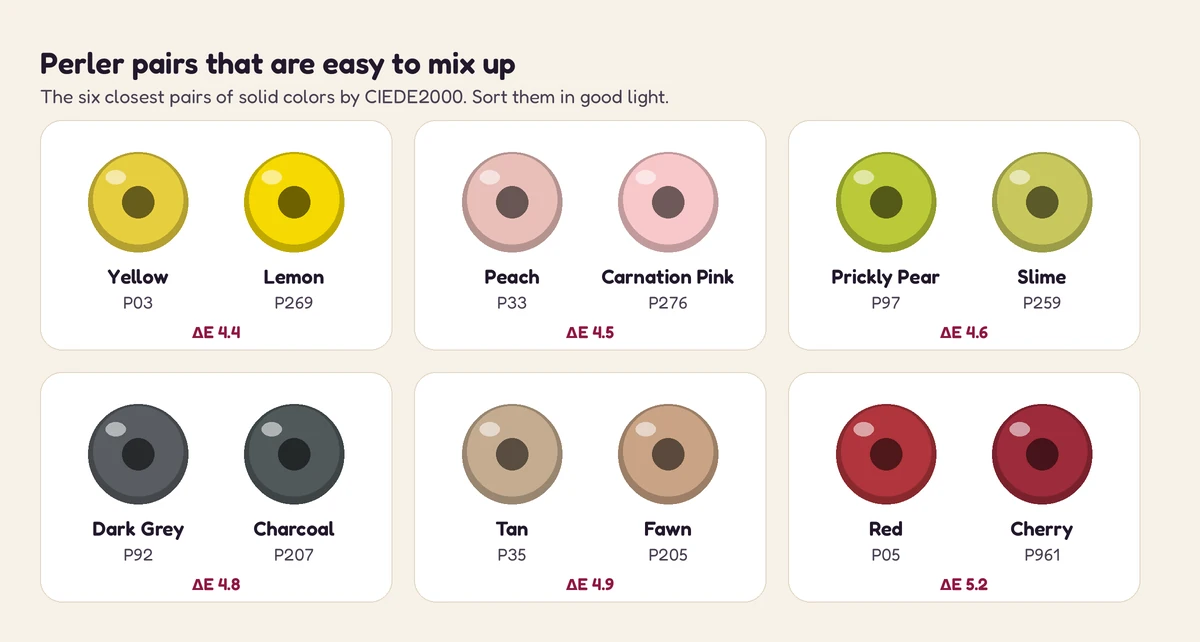
None of these pairs is identical, and in a large area the difference shows. Mixed into fur or a sky, though, they make good substitutes when you run out of one. To keep them apart at home, label every compartment with its code; our Perler bead storage guide shows how.
Colors that change after ironing (translucent, glitter, glow, pearl)
Most solid colors look about the same before and after ironing. Specialty beads don't, which is why a color chart on a screen can't really show them.
- Translucent beads let light through. On a wall they look darker than the bag suggests; in a window they glow. How far you melt them changes how much light gets through.
- Glow-in-the-dark beads look pale and milky in daylight. Use them where a pale color works anyway, like stars or eyes.
- Glitter, pearl and metallic beads depend on the angle of the light. They sparkle in hand but read as a flat color in photos and on patterns.
- Neon beads are much brighter in person than any screen swatch. A few go a long way.
BeadPop leaves special-effect beads out when it converts a photo for exactly this reason: a single color value can't predict how they will look.
Matching a photo to bead colors
Choosing between 100-odd shades by eye is the slowest part of making a pattern from a photo. Two things make it easier.
Why the closest color on screen isn't enough
Screens glow and beads don't. A bead color always looks a little different on a screen than on the table, and photos shift colors with every light source. On top of that, a color looks different next to its neighbors: a mid gray next to white reads darker than the same gray next to black.
The fix is to compare colors the way eyes do. Instead of matching red, green and blue numbers, good tools measure perceptual color difference (the ΔE above), so that "closest" means closest to a person, not to a computer. Then check the result against real beads before you buy.
Using fewer colors on purpose
More colors don't always mean a better likeness. One board has room for only 841 beads, and twenty colors in a small piece turn into noise. As a rule of thumb, aim for about 12 colors on one board, about 30 on four boards and under 50 on nine. BeadPop caps its Simple, Detailed and Photo levels at 12, 32 and 48 colors.
This is the step BeadPop automates. It picks every bead from the real palette of the brand you own, using perceptual color matching, and you can still adjust the colors yourself before you build.
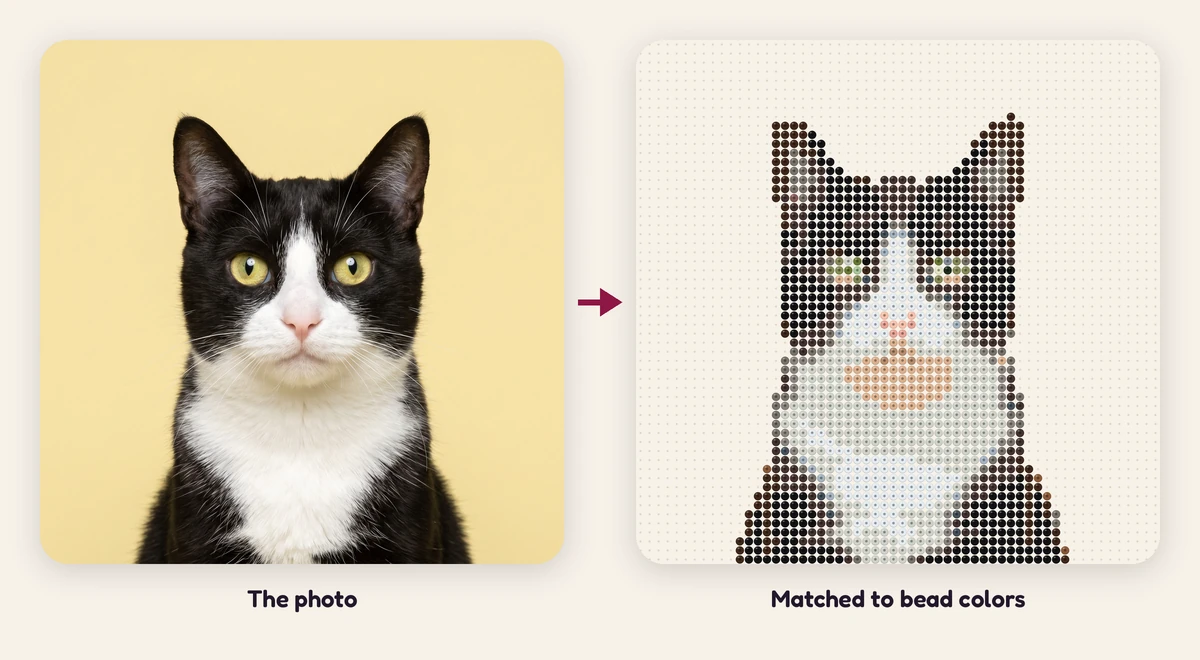
Turn your own photo into a bead pattern
BeadPop turns any photo into a bead pattern with real bead colors and a shopping list.
Hama, Artkal and MARD equivalents
If you own a different brand, or want to fill a gap, these are the closest matches to common Perler colors in three other brands. ΔE shows how close each one is: around 2 or less is a near-perfect swap, 5 or more is noticeable in a large area. Codes and names come from BeadPop's catalogs; MARD uses codes only.
| Perler | Closest Hama Midi | Closest Artkal S | Closest MARD |
|---|---|---|---|
| P01 White | H01 White (3.1) | S01 White (3.3) | P12 (2.2) |
| P03 Yellow | H03 Yellow (3.5) | S14 Sandstorm (1.5) | A8 (2.5) |
| P04 Orange | H79 Apricot (3.7) | S97 Papaya (3.2) | A7 (3.6) |
| P10 Dark Green | H10 Green (2.6) | S124 Pooltable Felt (5.5) | B12 (4.4) |
| P08 Dark Blue | H09 Light Blue (6.7) | S11 Dark Blue (2.4) | C16 (3.5) |
| P12 Brown | H111 Dark Blush (8.2) | S16 Brown (2.3) | G17 (5.0) |
| P17 Grey | H17 Grey (4.4) | S07 Gray (1.7) | H20 (4.4) |
| P98 Sand | H27 Beige (3.4) | S67 Vanilla (2.2) | G3 (3.8) |
| P207 Charcoal | H71 Dark Grey (5.4) | S89 Charcoal Gray (4.1) | Q5 (3.8) |
Notice Perler Dark Blue: its closest Hama match is called "Light Blue". Names really don't carry over. For sizes, pegboards and melting, see Perler vs Hama vs Artkal vs MARD.
Make your own swatch board
A swatch board made from your real beads beats any chart, because it shows your bags under your light.
- Use one large square pegboard. All 103 colors fit with an empty peg between swatches in both directions.
- Lay out one family per row: reds, oranges, yellows, greens, blues, purples, browns, grays.
- Iron it like a normal piece, both sides, and let it cool flat.
- Label it. Write each short code on a card next to its row, or on masking tape on the back.
- Add new colors as you buy them, so the board always matches your stash.
Keep it next to your pegboards. When a pattern asks for Fawn, you can hold the swatch against the photo and see whether Tan would do. If you are planning a pet portrait, our cat patterns guide suggests colors for each coat.
FAQ
How many Perler bead colors are there?
About 100 solid colors, plus neon, pastel, metallic, glow-in-the-dark and other specialty beads. BeadPop's catalog has 103 Perler colors for standard beads and 41 for Perler minis.
Is there a Perler bead color chart PDF?
Perler offers a downloadable color guide on its website. The chart image on this page is free to save. BeadPop's printable PDF can also show the color code on every square of your own pattern.
What are the hex codes for Perler bead colors?
The list below has an approximate hex value for each color. Use them for planning on screen, not as exact matches: dye batches and screens vary.
Is there an official Perler to DMC chart?
Not that we know of. DMC is embroidery floss, made for a different craft. Match by eye, or compare hex values and check the result against real beads and floss.
What about Hama bead colours?
Hama numbers its colours (01 White, 18 Black and so on). The equivalents table above shows the closest Hama colour for common Perler shades, and our Hama bead color chart lists every current Hama code.
Is there a MARD bead color chart?
MARD uses letter-and-number codes such as A1, F6 or H6. BeadPop's MARD catalog has 291 colors and matches photos to them directly.
Full Perler color list with hex codes
All 103 colors in BeadPop's Perler catalog, in code order. Hex values are approximate screen colors. Color values: BeadColors by maxcleme (MIT License).
| Code | Name | Bag code | Hex |
|---|---|---|---|
| P01 | White | 80-19001 | #EAEFEE |
| P02 | Creme | 80-19002 | #E1E2BB |
| P03 | Yellow | 80-19003 | #E7CE3E |
| P04 | Orange | 80-19004 | #EB7B31 |
| P05 | Red | 80-19005 | #B0353C |
| P06 | Bubblegum | 80-19006 | #D8729A |
| P07 | Purple | 80-19007 | #684B86 |
| P08 | Dark Blue | 80-19008 | #0E5092 |
| P09 | Light Blue | 80-19009 | #278CC9 |
| P10 | Dark Green | 80-19010 | #007B4E |
| P11 | Light Green | 80-19011 | #18C7B1 |
| P12 | Brown | 80-19012 | #674C44 |
| P17 | Grey | 80-19017 | #909497 |
| P18 | Black | 80-19018 | #323234 |
| P20 | Rust | 80-19020 | #995043 |
| P21 | Light Brown | 80-19021 | #936848 |
| P33 | Peach | 80-19033 | #E9BFB9 |
| P35 | Tan | 80-19035 | #C5AC90 |
| P38 | Magenta | 80-19038 | #E04284 |
| P52 | Pastel Blue | 80-19052 | #4A9CCF |
| P53 | Pastel Green | 80-19053 | #6DCC94 |
| P54 | Pastel Lavender | 80-19054 | #937FBF |
| P56 | Pastel Yellow | 80-19056 | #E9E290 |
| P57 | Cheddar | 80-19057 | #FBB146 |
| P58 | Toothpaste | 80-19058 | #96D1D4 |
| P59 | Hot Coral | 80-19059 | #DD595B |
| P60 | Plum | 80-19060 | #A75D9D |
| P61 | Kiwi Lime | 80-19061 | #69B845 |
| P62 | Turquoise | 80-19062 | #0098C5 |
| P63 | Blush | 80-19063 | #F99297 |
| P70 | Periwinkle Blue | 80-19070 | #6683B7 |
| P79 | Light Pink | 80-19079 | #E1BCCE |
| P80 | Green | 80-19080 | #4DAB64 |
| P83 | Pink | 80-19083 | #D45496 |
| P88 | Raspberry | 80-19088 | #983864 |
| P089 | Neon Blue | 80-15089 | #406AE1 |
| P90 | Butterscotch | 80-19090 | #DA9964 |
| P91 | Parrot Green | 80-19091 | #009188 |
| P92 | Dark Grey | 80-19092 | #585C61 |
| P93 | Blueberry Creme | 80-19093 | #85A8E3 |
| P96 | Cranapple | 80-19096 | #843947 |
| P97 | Prickly Pear | 80-19097 | #BBC938 |
| P98 | Sand | 80-19098 | #E5BE9E |
| P179 | Evergreen | 80-15179 | #305545 |
| P181 | Light Grey | 80-15181 | #B3BAB8 |
| P182 | Lavender | 80-15182 | #AF9FCE |
| P199 | Shamrock | 80-15199 | #008F53 |
| P200 | Cobalt | 80-15200 | #0065B1 |
| P201 | Midnight | 80-15201 | #2F3C55 |
| P202 | Robin's Egg | 80-15202 | #A9CDD5 |
| P203 | Flamingo | 80-15203 | #F2AFB7 |
| P204 | Salmon | 80-15204 | #E1747A |
| P205 | Fawn | 80-15205 | #C9A385 |
| P206 | Pewter | 80-15206 | #94A19D |
| P207 | Charcoal | 80-15207 | #4F595A |
| P208 | Toasted Marshmallow | 80-15208 | #DEDACE |
| P210 | Orchid | 80-15210 | #B1628E |
| P211 | Tomato | 80-15211 | #D14337 |
| P212 | Spice | 80-15212 | #D9593A |
| P213 | Apricot | 80-15213 | #F5A168 |
| P214 | Sherbet | 80-15214 | #D8E47C |
| P215 | Mist | 80-15215 | #93B0BD |
| P216 | Sky | 80-15216 | #4AC0D8 |
| P217 | Lagoon | 80-15217 | #00A4AC |
| P218 | Teal | 80-15218 | #047F8A |
| P219 | Fern | 80-15219 | #7F971A |
| P220 | Olive | 80-15220 | #696E31 |
| P239 | Mocha | 80-15239 | #C8B693 |
| P240 | Mint | 80-15240 | #B3EED5 |
| P241 | Sour Apple | 80-15241 | #A3DE6F |
| P242 | Cotton Candy | 80-15242 | #F479B0 |
| P243 | Grape | 80-15243 | #503B9C |
| P244 | Rose | 80-15244 | #D25D72 |
| P245 | Iris | 80-15245 | #4E56A3 |
| P246 | Tangerine | 80-15246 | #FD5918 |
| P247 | Forest | 80-15247 | #005D57 |
| P248 | Eggplant | 80-15248 | #6F3255 |
| P249 | Honey | 80-15249 | #DA8C2C |
| P250 | Gingerbread | 80-15250 | #7E5446 |
| P251 | Thistle | 80-15251 | #8C8CA7 |
| P252 | Slate Blue | 80-15252 | #5E6D7B |
| P253 | Denim | 80-15253 | #4C6388 |
| P254 | Sage | 80-15254 | #9AA98E |
| P255 | Orange Cream | 80-15255 | #EFB79B |
| P256 | Fruit Punch | 80-15256 | #CA3B65 |
| P257 | Fuchsia | 80-15257 | #CB59B9 |
| P258 | Mulberry | 80-15258 | #714875 |
| P259 | Slime | 80-15259 | #C8C85C |
| P260 | Stone | 80-15260 | #988C8C |
| P261 | Dark Spruce | 80-15261 | #14313B |
| P262 | Cocoa | 80-15262 | #392928 |
| P263 | Celery | 80-15263 | #BED4A6 |
| P265 | Twilight Plum | 80-15265 | #C685B1 |
| P266 | Caribbean Sea | 80-15266 | #6CC8AD |
| P267 | Frosted Lilac | 80-15267 | #CDB7C3 |
| P268 | Sunflower | 80-15268 | #DEBA0B |
| P269 | Lemon | 80-15269 | #F6D901 |
| P272 | Coral | 80-15272 | #FF9A8B |
| P273 | Brick | 80-15273 | #FC9574 |
| P274 | Rich Butter | 80-15274 | #F6CA69 |
| P275 | Peacock | 80-15275 | #0090AC |
| P276 | Carnation Pink | 80-15276 | #F8C7C9 |
| P961 | Cherry | 80-15961 | #9D2B3A |
Turn your own photo into a bead pattern
BeadPop turns any photo into a bead pattern with real bead colors and a shopping list.