Selling Perler Beads: What to Make and What to Charge
Selling Perler beads is one of the easiest ways to turn a hobby into pocket money. The beads are cheap, the pieces are small, and people smile when they see them on a table. The hard parts are knowing what sells, pricing so you don't work for free, and staying away from designs you have no right to sell. This guide covers all three, with a pricing formula you can reuse for every piece.
Everything here works the same with Hama beads, the brand most UK sellers use, and with Artkal or any other fuse beads.
Can you sell Perler bead creations?
Yes. A piece you designed yourself, or made from a pattern whose author allows sales, is yours to sell. Fuse beads are a craft material like yarn or clay.
Two limits apply:
- The design. Characters, logos and franchise art belong to someone else. More on that below.
- The brand name. Perler and Hama are trademarks. You can describe your piece as "made with Perler beads," because that's true. Don't use their logos, and don't word a listing so it looks like the brand made, sponsors or approves your shop.
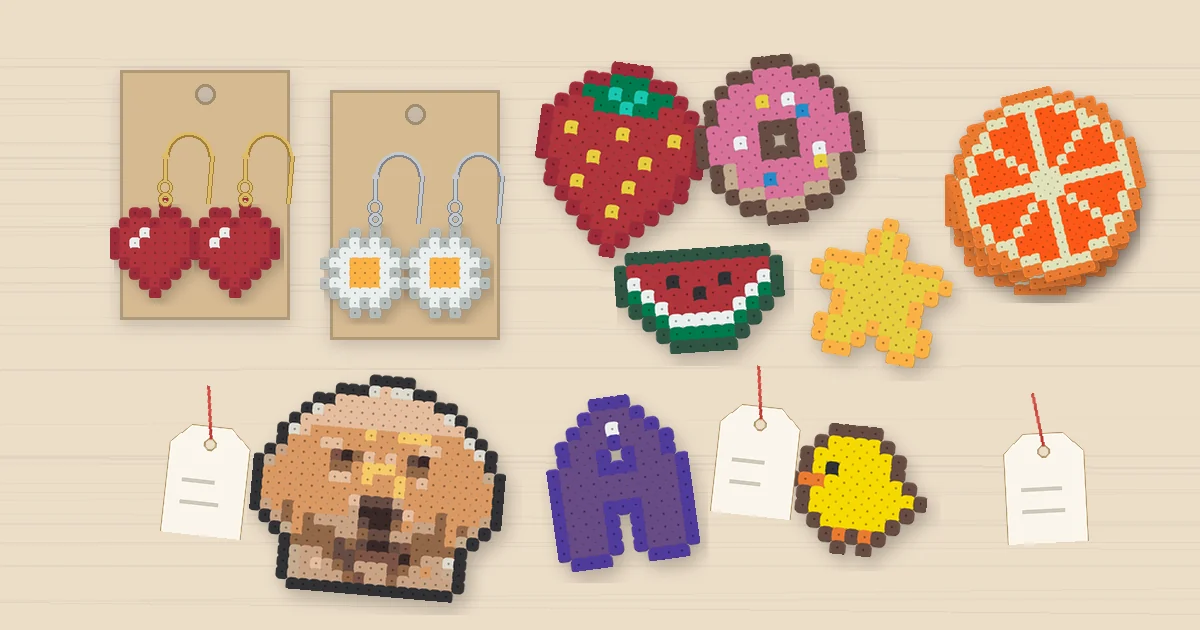
What sells: keychains, magnets, earrings, custom portraits
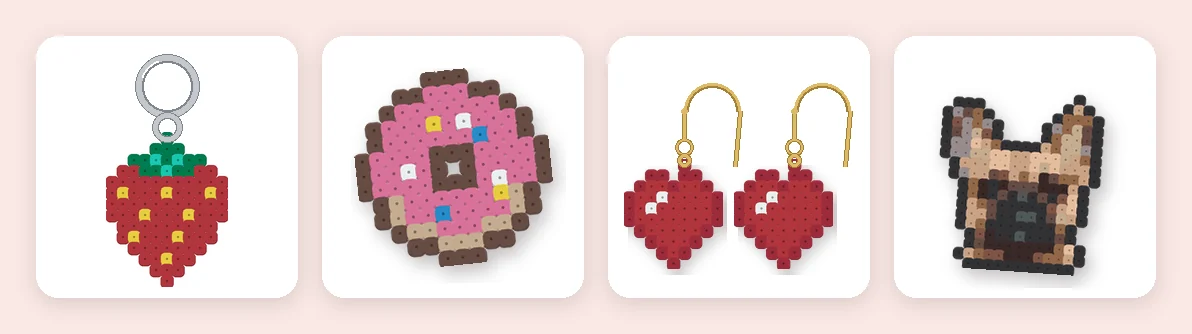
The pieces that sell are small, useful and cheap enough to buy on impulse:
- Keychains and bag charms. One sitting, a modest pile of beads and a ring. Our Perler bead keychain guide shows where to leave the hole so it hangs straight.
- Fridge magnets. Fruit, snacks and letters sell well as sets of three. The Perler bead magnets guide covers which magnets and glue hold.
- Earrings. Light, colorful and easy to display on cards. Mini beads give finer shapes. See our Perler bead earrings guide.
- Coasters. Sell them in stacks of four or six, not one by one.
- Custom portraits. A customer's pet or a family photo, made to order. Fewer sales, much higher price.
Start with five or six designs you can make fast and well, in two or three colorways each. A full table of one strong design looks better than one of everything.
How much should you charge for Perler bead art?
Use the same formula for every piece:
Price = beads + (time × hourly rate) + supplies + platform and payment fees
- Beads. Price of a bag ÷ beads in the bag = cost per bead. Multiply by the beads in the design. Our bead counting guide shows how to count a pattern.
- Time. Placing, ironing, finishing and packing. Time yourself on the first two or three pieces instead of guessing.
- Hourly rate. Pick a rate you'd accept for any other part-time work. Be honest: crafters who skip this line end up paying to work.
- Supplies. Key rings, jump rings, earring hooks, magnets, glue, backing cards, bags and labels.
- Fees. What the marketplace and the payment processor take.
Bead prices change and vary by store, so treat this as an example. In November 2026, perler.com listed a 6,000-bead bag of a single color at $13.19. That's about $0.0022 per bead, or roughly 22 cents per 100 beads. Big-box stores often charge more for the same bag.
On Etsy, the US fees are a $0.20 listing fee, a 6.5% transaction fee on the order total (shipping included) and, for US bank accounts, a payment processing fee of 3% plus $0.25. Etsy also has optional ad programs with their own fees. At a craft fair there's no marketplace fee, but count your table rent and your card reader's cut.
A worked example: a keychain and a 2×2 portrait
The time, rate and supply numbers below are examples. Replace them with your own.
| Strawberry keychain | 2×2 board portrait | |
|---|---|---|
| Beads | 130 (129 + one tab bead) | 3,364 (58 × 58) |
| Bead cost at $0.0022 | $0.29 | $7.40 |
| Time at $15/hour | 15 min = $3.75 | 4 hours = $60.00 |
| Supplies | Ring, card, bag: $0.50 | Hanger, backing, box: $5.00 |
| Cost before fees | $4.54 | $72.40 |
| Craft fair price | $5 | $75 |
| Etsy price (covers 9.5% + $0.45 in fees) | about $5.50 | about $80 |
To cover Etsy's fees, add the fixed $0.45 (listing plus processing) to your cost and divide by 0.905. That's how $4.54 becomes about $5.50.
Notice what drives the price. In the keychain, the beads cost less than the ring and the card, and your time is most of the price. In the portrait, time is still the biggest line, so never discount a custom piece by "just the cost of beads."
Where to sell Perler beads
- Craft fairs and markets. The best place to start. People see the colors up close and buy on impulse. Bring change, a card reader and a sign with prices.
- Etsy. Good for custom portraits and themed sets, where buyers search for something specific. Plain keychains compete with thousands of listings.
- Instagram and TikTok. Short videos of placing and ironing get attention. Take custom orders by direct message, with a clear price list.
- Local shops. Gift shops, cafés and pet groomers sometimes take small pieces on consignment. Agree on the shop's percentage in writing first.
- School and charity events. Small prices, lots of buyers, good practice for fairs.
Custom pet portraits: the order that pays best
Pet owners will pay for their own dog or cat in beads. A portrait is also the one product nobody else at the fair can offer, because it's made from the customer's own photo.
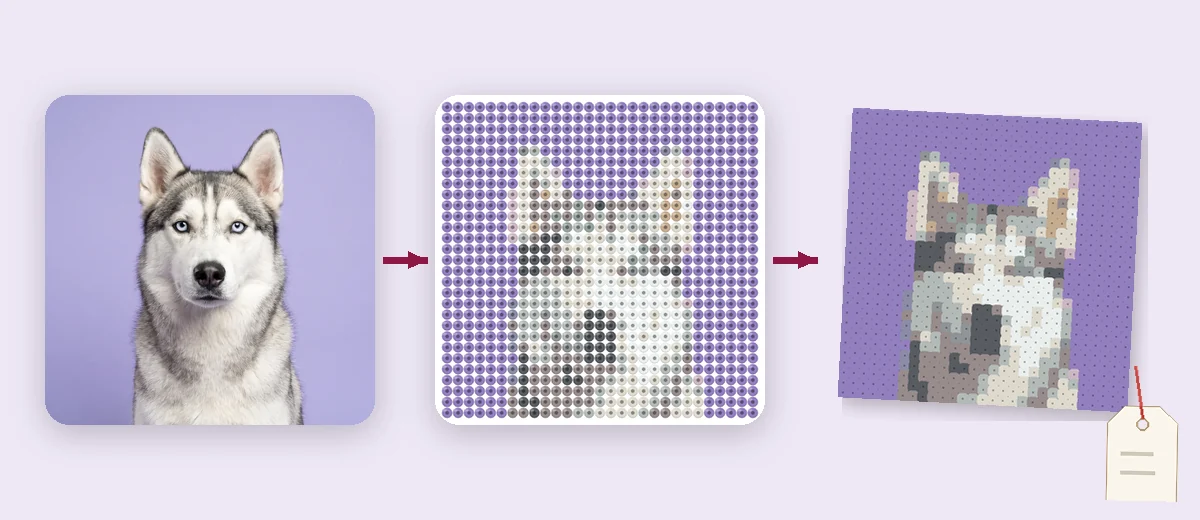
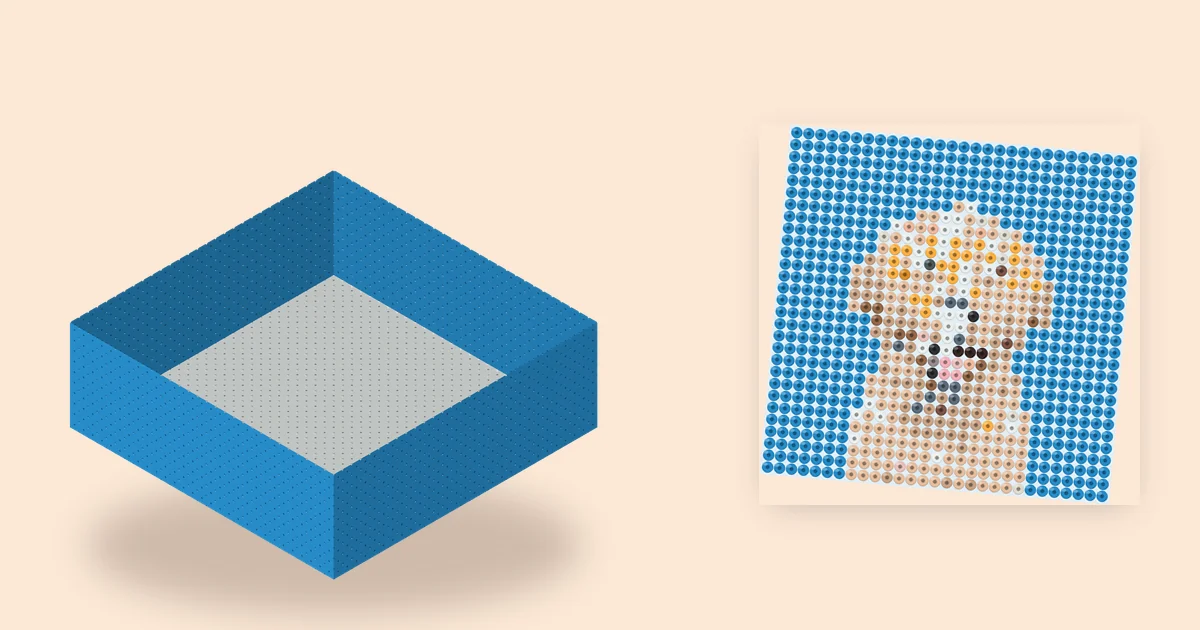
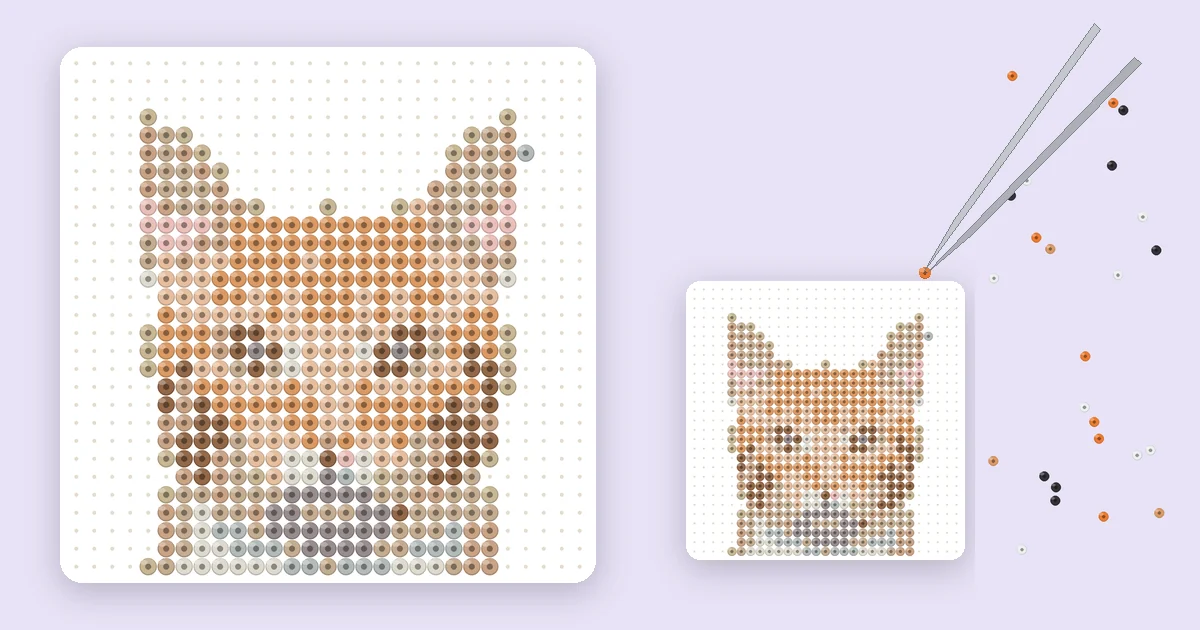
The slow part used to be the pattern: matching every square of the photo to a real bead color, then counting each color. BeadPop does that on iPhone. It turns the customer's photo into a pattern in the brand you sell with (Perler, Hama, Artkal, MARD or Nabbi) and gives you the exact count of each color, plus a PDF that prints at actual size.
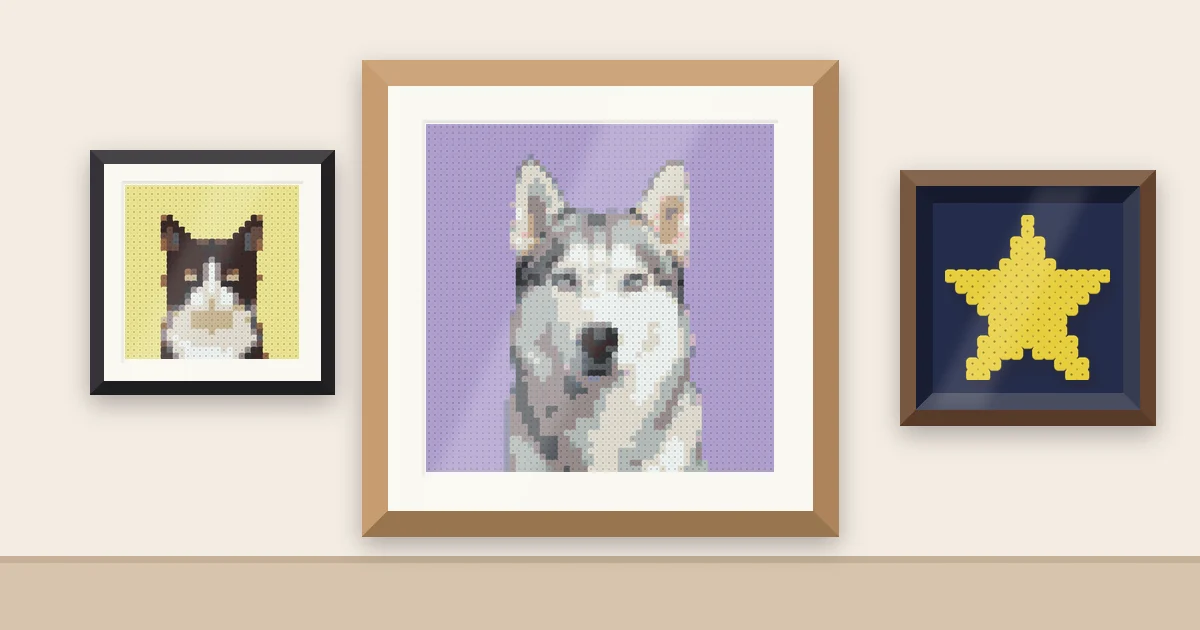
That count is what makes quoting easy. The husky above fits one 29 × 29 board, 841 pegs. The face takes 420 beads in 10 colors, and the lavender background fills the rest. Multiply the beads by your cost per bead, add your time, and you can quote before you take the order. You also know which colors to buy before you start.
A few rules make custom work smoother:
- Ask for a sharp photo with the face filling the frame and the eyes in focus.
- Send the pattern for approval before you place a bead.
- Take a deposit, half up front is common, since a custom piece can't be sold to anyone else.
- Offer two or three sizes with set prices, instead of quoting from zero each time.
- Use the customer's own photo. In the US the photographer usually owns a photo's copyright, so a picture pulled from someone else's page isn't free to use.
Turn your own photo into a bead pattern
BeadPop turns any photo into a bead pattern with real bead colors and a shopping list.
Characters and logos: what you can't sell
This is where many bead sellers get takedown notices. Cartoon characters, video game sprites, sports logos and band art are protected. Copyright covers the artwork itself. A trademark covers names, logos and designs that identify a brand. Redrawing a character in beads doesn't make it yours.
Many sellers believe fan art is fair use if they give credit. The US Copyright Office's fair use FAQ says fair use depends on all the circumstances, with no fixed rules. It also says changing someone's work doesn't give you rights to it, and that when in doubt you should ask the owner for permission. Selling copies for profit is a weak position.
The same goes for the bead brands. Perler belongs to Advantus, which publishes a list of its trademarks. "Made with Perler beads" in a description is fine. A Perler logo on your banner is not.
Safe ground: your own designs, fruit, food, flowers, animals, letters, and customers' own pets. Marketplaces also remove listings that infringe. This is general information, not legal advice. If you're unsure about a design, talk to a lawyer before you sell it.
Photos, packaging and shipping
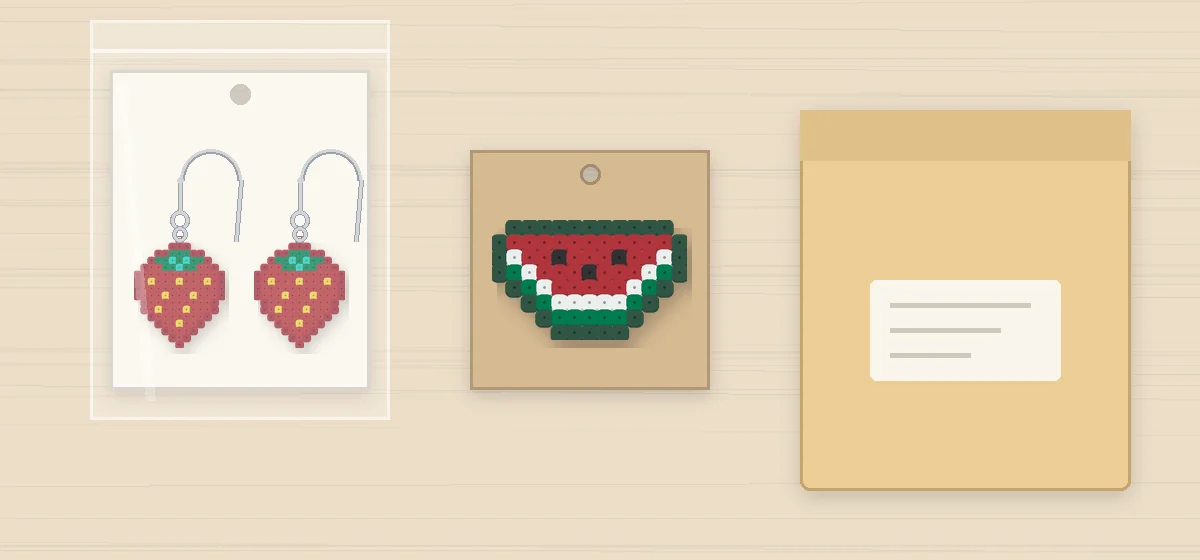
- Photos. Daylight, a plain background, and one shot with a hand or a key ring for scale. Show the back too, so buyers see the finish.
- Cards. Earrings and small magnets look finished on a backing card with your shop name. The card also stops earrings from tangling.
- Bags. Clear bags keep pieces clean on the table and in the mail.
- Shipping. Ironed pieces are light and tough. A padded mailer is usually enough. Add a stiff card for large portraits so they can't bend.
- Kids. Pieces sold as toys for young children raise safety rules. In the US, the CPSC's small parts rules ban small parts in products for children under 3 and require choking warnings on some toys for older kids. Selling keychains or magnets as decorations, not toys, and keeping them away from small children is the simple route. If you want to sell toys, read the rules first.
FAQ
Can you sell Perler bead creations?
Yes, if the design is yours or the pattern's author allows sales. Characters, logos and franchise art need a license from the owner.
How much should I charge for Perler bead art?
Add bead cost, your time at an hourly rate, supplies, and marketplace and payment fees. A small keychain usually lands around $5 to $6. A large custom portrait runs much higher, because time is most of the price.
What Perler bead ideas sell best?
Keychains, fridge magnets, earrings, coaster sets and custom pet portraits. Small and useful sells best at fairs. Custom portraits earn the most per piece.
Can I say my items are made with Perler or Hama beads?
Yes, if it's true. Just don't use the brands' logos or suggest they endorse your shop.
Turn your own photo into a bead pattern
BeadPop turns any photo into a bead pattern with real bead colors and a shopping list.